


Research
Alzheimer’s disease and related tauopathies are devastating disorders marked by the formation of toxic amyloid assemblies of the tau protein, whose propagation throughout the brain closely correlates with disease severity. Despite its central role, the triggers and drivers of tau pathology remain poorly understood, and no effective disease-modifying therapies exist.
The Tayeb-Fligelman lab aims to understand and mitigate tau pathology by exploring:
-
The role of gut microbiome-derived metabolites in modulating tau aggregation in the brain
-
Structural interactions between tau assemblies and microglial receptors that promote neurodegeneration
-
The interplay between microbial amyloids and tau amyloids in tauopathies
-
Pharmacophores and drug-targetable structural vulnerabilities within tau amyloids
We integrate cryo-EM, cryo-ET, biochemistry, and neuronal cell models to dissect tau biology from atomic to cellular scales. Our multi-platform approach aims to uncover new therapeutic entry points for tackling these complex and multifactorial diseases.


Infectious Amyloids as Structural Drivers of Tauopathies
Several viruses and microbes associated with neurodegeneration encode proteins capable of forming amyloid assemblies, yet their structural impact on tau remains almost entirely unexplored. We combine computational amyloid-prediction tools with biochemical and structural methods to identify and characterize amyloid-forming proteins from pathogens linked to neurodegenerative disease. We then examine how these infectious amyloids interact with tau using cryo-EM, cryo-ET, and neuronal models to dissect cross-seeding, structural remodeling, and other mechanisms through which pathogen-derived assemblies may act as drivers of tau pathology.


Figure adapted from Tayeb-Fligelman et al., Nature Communications. 2023

Therapeutic Targeting of Amyloids
Amyloid assemblies are structurally diverse and biologically potent, yet their atomic-level features reveal vulnerabilities that can be exploited for therapeutic intervention. By studying amyloids extracted from human brains and solving high-resolution structures of fibrils in complex with small-molecule modulators, we identify binding interfaces and structural weak points that can be targeted to alter amyloid formation, stability, and toxicity. These insights will guide the development of molecules capable of disrupting aggregation, blocking pathological propagation, or remodeling toxic assemblies.


Gut Microbiome Influence on Tau Pathology
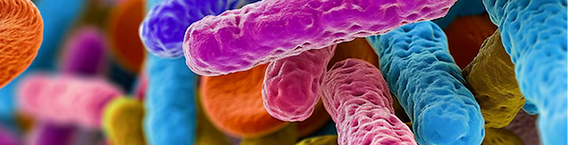
Growing evidence links gut dysbiosis and microbiome-derived metabolites to neurodegenerative processes, yet their direct impact on tau aggregation remains poorly defined. We investigate how gut-microbiome-derived signals modulate tau aggregation, structure, and toxicity. By integrating neuronal models, amyloids isolated from human brains, and structural biology, we aim to identify microbiome-derived factors that promote or suppress tau pathology and uncover new systemic routes for intervention.

Neuroimmune Interactions and Microglial Engagement with Tau
Neuroinflammation is a hallmark of tauopathies, and microglia respond to tau aggregates in ways that can either protect neurons or exacerbate disease. However, the structural basis of these interactions is not well understood.
We study how tau assemblies engage microglial receptors and immune pathways at the molecular level. Through cryo-EM, cryo-ET, and biochemical analyses, we aim to reveal how these interactions trigger inflammation, amplify pathology, and shape disease progression.
